
When thinking about a sweet taste, sugars always come to mind but proteins are no joke! Excessive sugar intake has been associated with several lifestyle-related diseases. Finding healthier and more economical alternatives to sugars and artificial sweeteners has received increasing attention to fulfil the growing demand (ref.).
If you are looking for companies selling sweet proteins, have a look at


Sugar, or sucrose, is the most popular sweetener and an essential in daily food. But some proteins are also sweet! Wanna know more?

Scientists are publishing a lot about them (ref):
Sugar, or sucrose, is the most popular sweetener and an essential in daily food. However, excessive sugar intake has been associated with several lifestyle-related diseases. Finding healthier and more economical alternatives to sugars and artificial sweeteners has received increasing attention to fulfill the growing demand (ref.).
When thinking about a sweet taste, sugars always come to mind but proteins are no joke!
Up to seven sweet and taste-modifying proteins have been identified: Brazzein, Thaumatin, Monelin, Curculin, Mabinlin, Miraculin and Pentadin.
Sweet proteins are naturally present in plants and have been explored by scientists as possible replacements for artificial low-calorie sweeteners (see this article). They can indeed trigger our sweet taste buds. The sweetest protein known is thaumatin and it has recently been modified to become HYPERSWEET (here is the link to the scientific article). Fun fact, a single point mutation (modification), a single amino acid change, was sufficient!
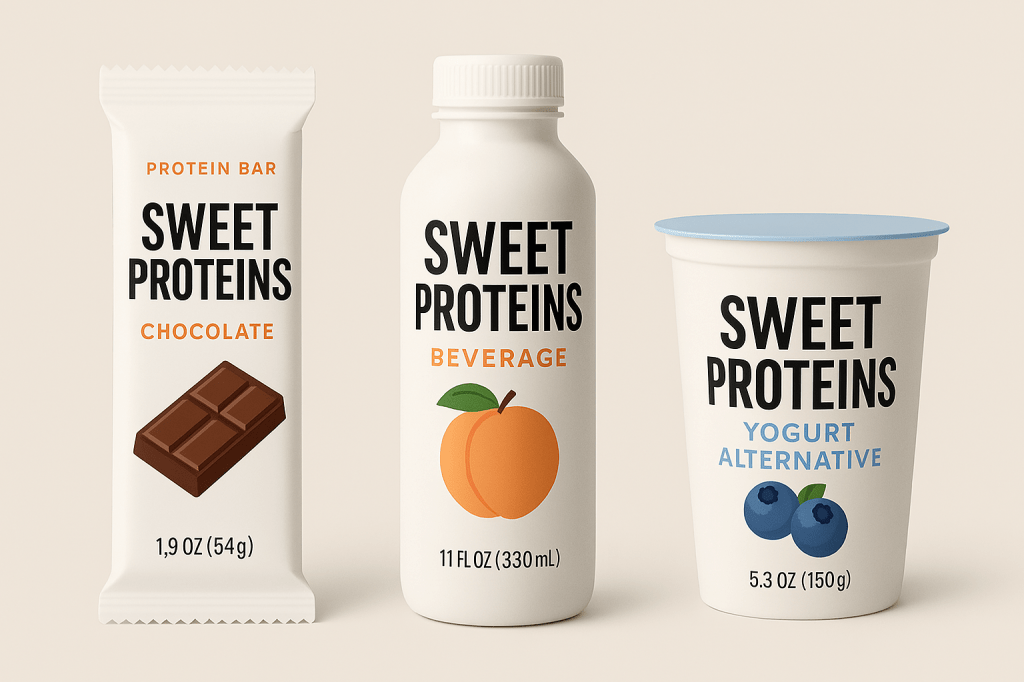
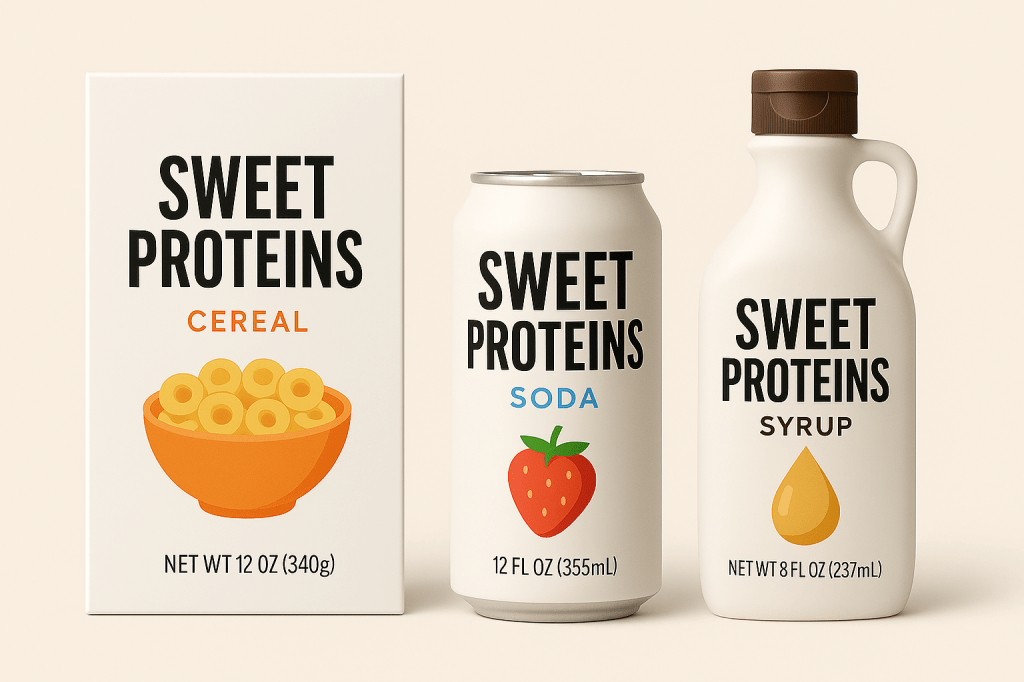
Sweet proteins are a fascinating group of plant-derived proteins that provide intense sweetness without the calories of traditional sugars. Sweet proteins are commercially available as food ingredients and for food development. They could take many forms and be in many products:
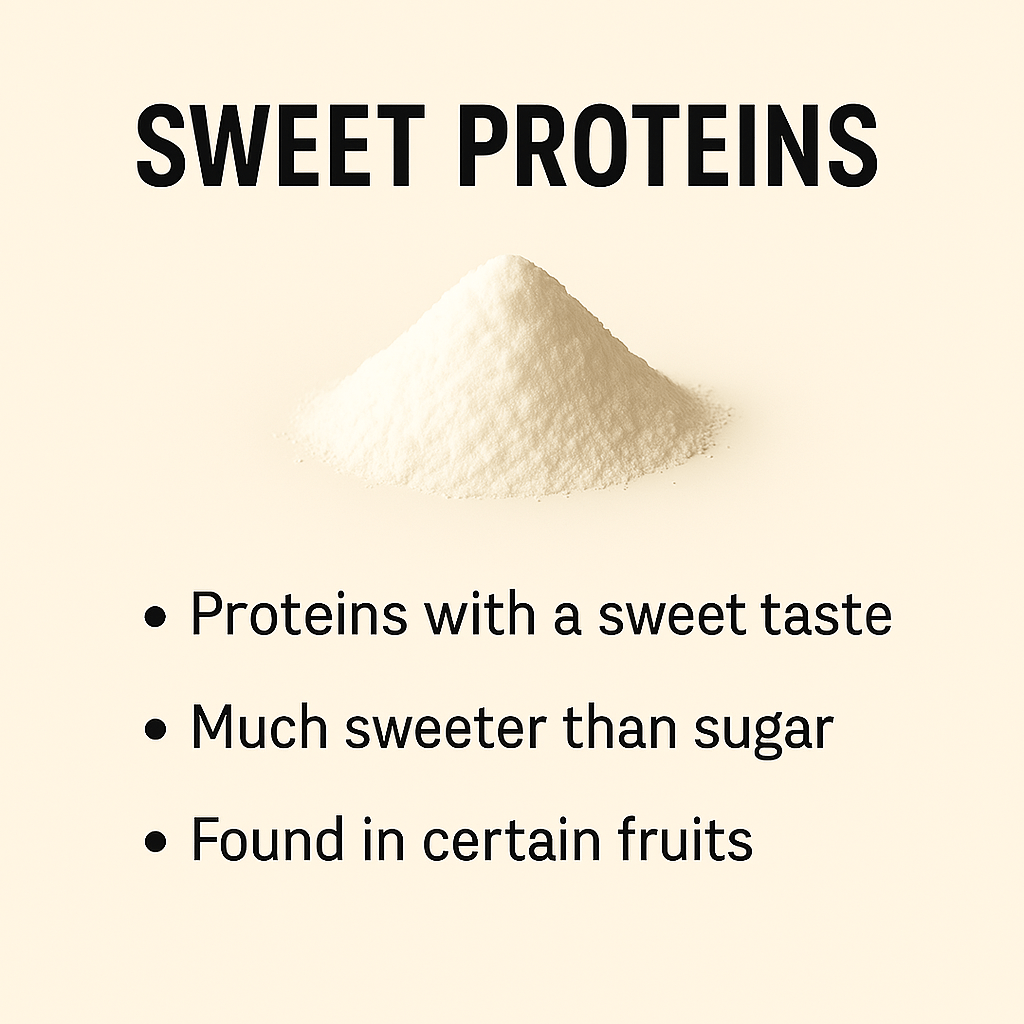
These proteins have huge potential in the food industry as low-calorie sweeteners or taste modifieres (although this is an application prohibited in many jurisdictions)and are being explored for their applications in managing conditions like diabetes and obesity. Up to seven sweet and taste-modifying proteins have been identified Brazzein, Thaumatin, Monelin, Curculin, Mabinlin, Miraculin and Pentadin.
Some of the most notable sweet proteins include:
- Thaumatin: Extracted from the katemfe fruit, it’s incredibly sweet and often used as a flavor enhancer.
- Brazzein: Found in the oubli fruit, it’s about 2,000 times sweeter than sucrose and stable under heat.
- Monellin: Derived from the serendipity berry, it’s very sweet but less stable in heat compared to others.
- Miraculin: Famous for its ability to make sour foods taste sweet, it’s extracted from the miracle fruit.
Similar to the commercial sucrose sugar we use, sweet proteins are also sustainable as coming from plant sources. Some of them are commercially available as purified or in their original fruits or plant material (SHOP).
| Source PLANT | Common name | Distribution | Sweet protein | MW (Da) |
|---|---|---|---|---|
| Thaumatococcus danielli | Sweet Prayer Plant, Katemfe | West Africa | Thaumatin | 22200 |
| Dioscoreophyllum cumminsii | Serendipity Berry | West Africa | Monellin | 13000 |
| Pentadiplandra brazzeana | Joy perfume tree | West Africa | Brazzein | 6473 |
| Capparis masakai | mabinlang | China | Mabinlin | 12400 |
| Curculigo latifolia | lembah, lumbah, weevil-wort | Malaysia | Curculin | 14600 |
| Richadella dulcifica | Miracle fruit | West Africa | Miraculin, also active as sweet taste modifier | 24600 |
| Pentadiplandra brazzeana | Joy perfume tree | West Africa | Pentadin | 12000 |
Despite their promise as great sugar substitutes, many of them are only produced on a small scale and are not available worldwide. Thanks to scientists and entrepreneurs, the scene is changing and companies targeting the production of sweet proteins are being born thanks to modern biotechnology.
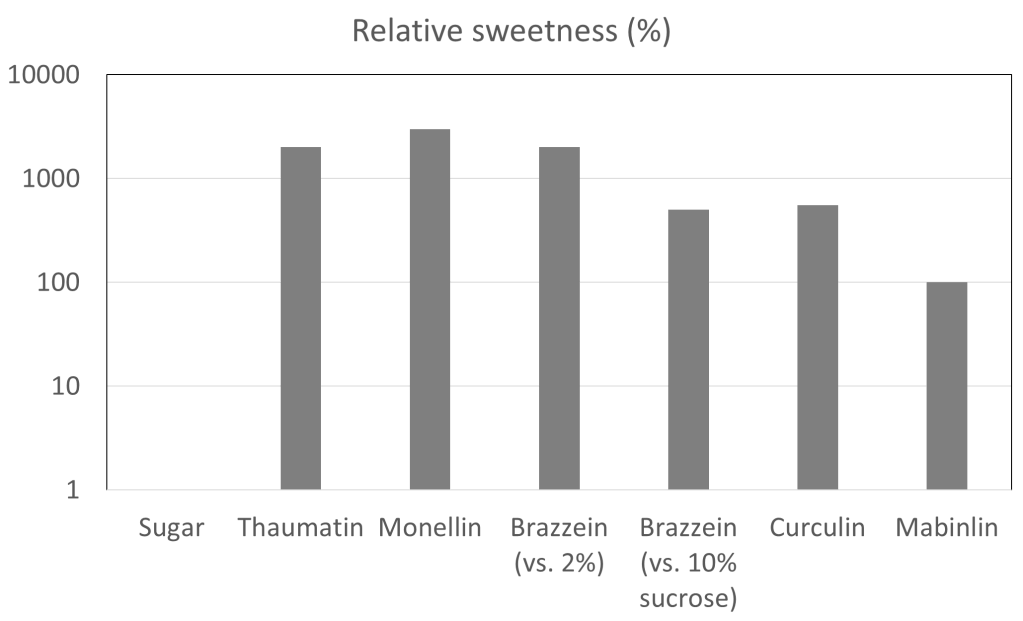
Natural sweeteners are not a novelty and many plants provide a sweet natural taste that is not necessarily coming from the sugar content or sugar molecules. Stevia is well known but is not a protein-based sweetener, from a biochemical point of view. Sweet proteins are naturally present in plants and have been explored by scientists as possible replacements for artificial low-calorie sweeteners (see this article). They can indeed trigger our sweet taste buds. The sweetest protein known is thaumatin and it has recently been modified to become HYPERSWEET (here is the link to the scientific article). Fun fact, a single point mutation (modification), a single amino acid change, was sufficient to boost its interaction with our sweet taste receptors and thus its sweetness.
Although few are commercially available at the moment (SHOP), the market for natural protein-based sweeteners might just be opening up with companies that are receiving millions in funding, developing and rushing products through the development, and towards the shelves.
The market for sweet proteins is experiencing significant growth. In 2023, the global market for sweet proteins was valued at USD 12.1 million, and it is projected to reach USD 19.7 million by 2033, with a compound annual growth rate (CAGR) of 8.1%. This growth is driven by increasing consumer awareness of the benefits of sweet proteins, such as their superior sweetness and low-calorie content.
Sweet proteins are being increasingly used in the packaged food and beverage sector, as well as in confectionery, due to their natural origin and minimal processing. The demand for sugar alternatives and natural sweeteners is also contributing to the market’s expansion. Key players in the market are focusing on developing new sweet proteins with improved functional properties and exploring natural sources for extraction. The trend towards plant-based and vegan diets is further boosting the demand for sweet proteins.
(c) G. F., 2022.
 THE SWEET PROTEIN SHOP